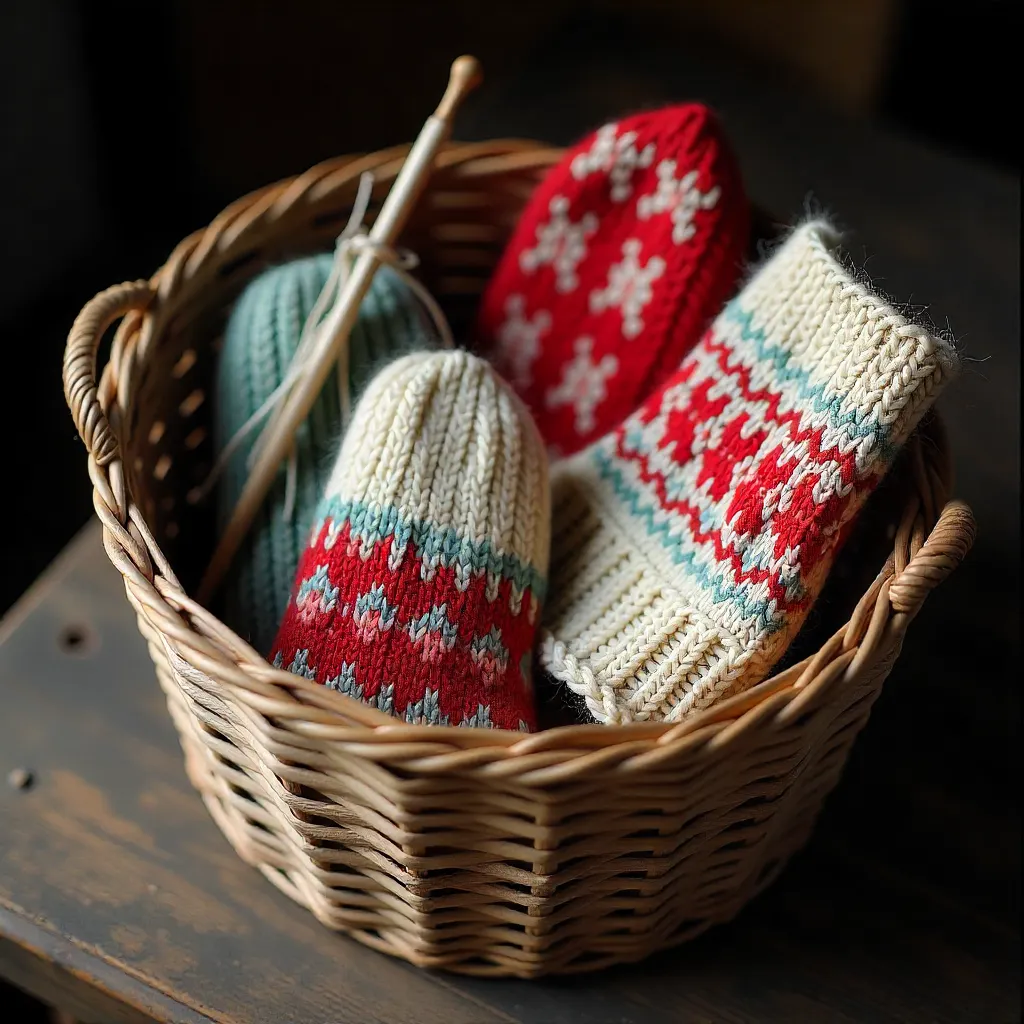
Every garment tells a story. In Finnish households, heavily repaired sweaters and socks carry layers of history—not just of the fabric itself, but of the hands that mended them, the occasions they were worn, and the care that kept them in use for generations.

These garment biographies document the life of textiles that have been loved, worn, damaged, and lovingly repaired. Each repair adds a chapter to the story, creating a visible record of time, use, and care.

The Winter Sweater

This heavy wool sweater has been in the family for three generations. Originally knit by a great-grandmother in the 1940s, it has seen countless winters, each one adding new wear patterns and repairs.

The elbows show the most history. The first repair, done in the 1960s, used a matching grey wool and Swiss darning technique. The second, from the 1980s, incorporated a visible mend with contrasting navy thread, creating a subtle star pattern. The most recent repair, completed just last year, uses a modern approach with decorative embroidery that celebrates rather than hides the wear.

Each layer tells us something about the person who wore it and the person who repaired it. The careful matching of the first repair suggests someone who valued invisibility. The decorative second repair shows a shift toward celebrating the garment's history. The latest repair reflects a contemporary appreciation for visible mending as both practical and artistic.

The Work Socks

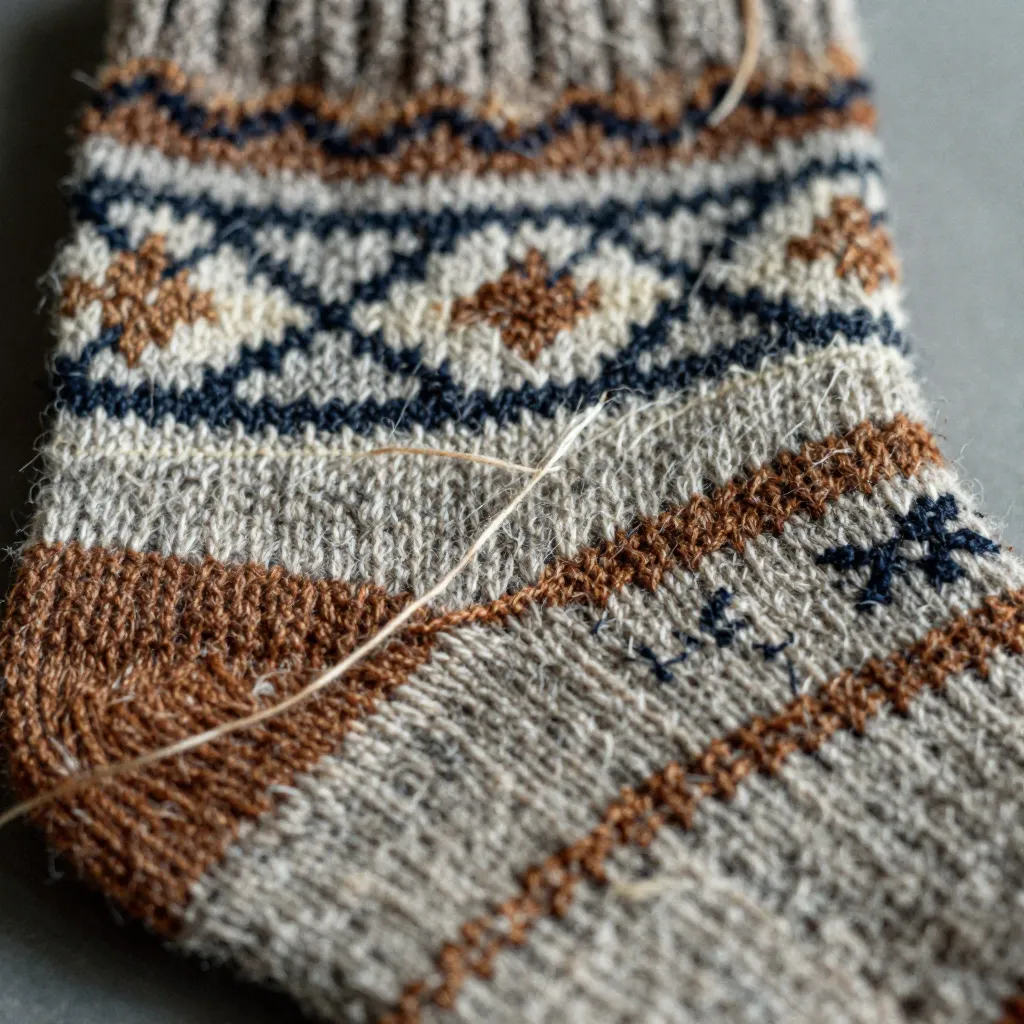
These thick wool socks belonged to a farmer who worked the land for over fifty years. The soles show multiple layers of darning, each repair building on the last, creating a patchwork of different colored threads that map the years of use.

The earliest repairs are nearly invisible, done with matching yarn and careful duplicate stitch. As the years passed and matching yarn became harder to find, the repairs became more visible. Some use contrasting colors—deep reds, forest greens, and warm browns—creating a pattern that tells the story of resourcefulness and making do.

The heel area shows the most work, with at least six distinct repair layers. Each one was done when the previous repair began to wear through, creating a record of care that spans decades. The socks are still in use today, worn by the farmer's grandson, who continues the tradition of repair.

The Hand-Knit Mittens

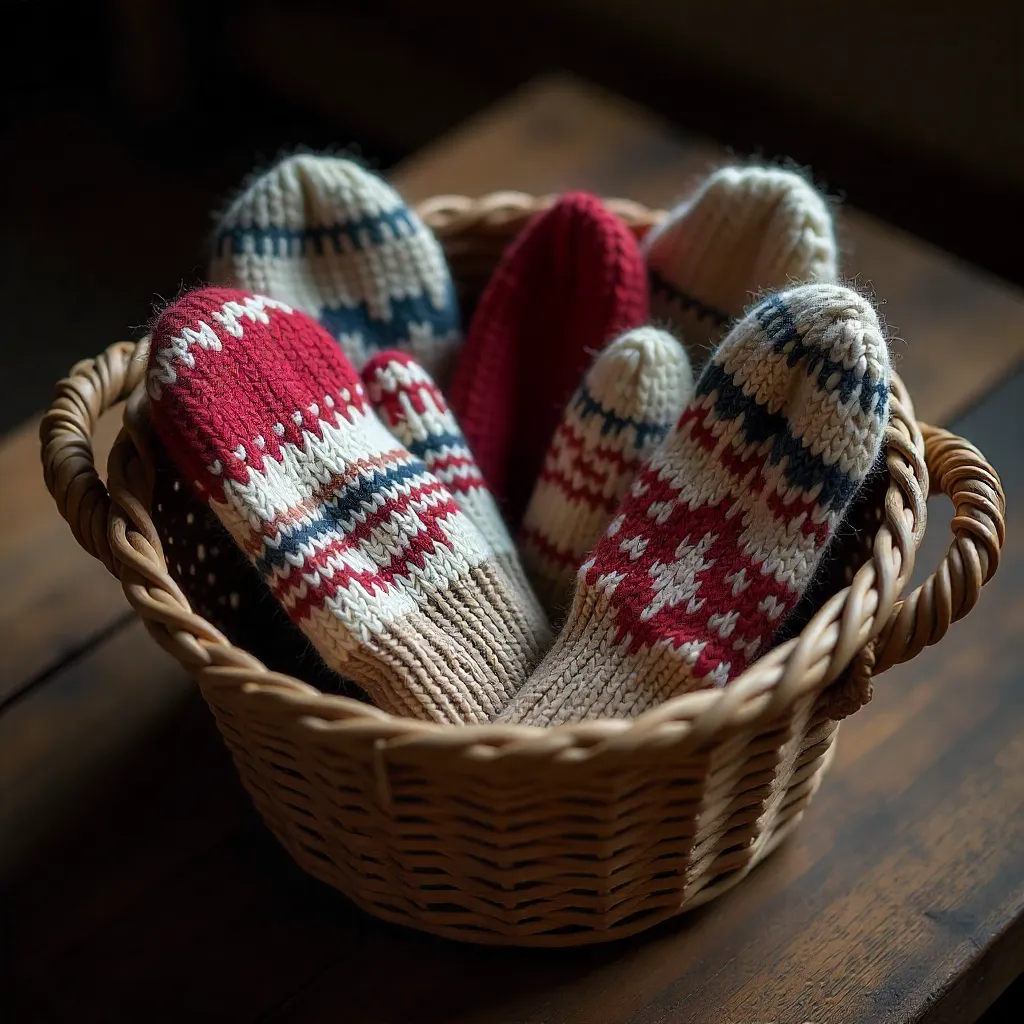
These mittens tell a different story—one of careful preservation and occasional repair. Knit from hand-spun wool in the 1950s, they have been worn every winter since, yet show remarkably little wear.

The few repairs that exist are nearly invisible, done with such skill that they blend seamlessly with the original fabric. The thumb area on the right mitten shows a small patch of duplicate stitch, done so carefully that it's only visible when examined closely.

What makes these mittens remarkable is not the extent of their repairs, but the care with which they've been maintained. They represent a different approach to garment longevity—preventive care rather than extensive repair. The owner understood that small fixes, done early, prevent larger problems later.

The Family Sweater

This sweater has been passed down through four generations of a Finnish family. Each generation has added their own repairs, creating a patchwork of techniques and styles that tells the family's history.

The oldest repairs, from the 1920s, use simple woven darning in matching colors. The 1950s repairs show more decorative elements, with visible mending that adds floral patterns. Recent repairs incorporate modern techniques while respecting the garment's history.

The sweater is now too fragile for regular wear, but it remains a treasured family heirloom, displayed during special occasions as a reminder of the care and skill that has kept it alive for nearly a century.

Documenting Repairs

Photographic documentation of repair layers

Visual Records

Many crafters document their repairs through photographs, creating visual records that show how garments evolve over time. These images become part of the garment's story.

Written notes about repair techniques used

Written Notes

Some crafters keep written records of repairs, noting dates, techniques used, and reasons for each mend. These notes help future generations understand the garment's history.

Oral traditions passed through families

Oral Traditions

Many garment stories are passed down orally, with each generation adding their own memories and experiences to the narrative.

The Emotional Connection

Repaired garments often carry deep emotional significance. A sweater mended by a grandmother becomes more than clothing—it becomes a connection to that person, a physical reminder of their care and skill.

This emotional connection motivates continued repair. People are more likely to mend garments that have meaning, whether because they were gifts, heirlooms, or simply favorites that have been worn for years.

Understanding this emotional dimension helps explain why some garments are repaired repeatedly rather than replaced. The repairs themselves become part of the garment's value, adding layers of meaning that cannot be found in new clothing.


Layers of Meaning

These garment biographies reveal more than just repair techniques. They show us how objects become repositories of memory and meaning. Each repair is a decision—to preserve rather than replace, to invest time and skill rather than discard.

In a culture that increasingly values the new and disposable, these heavily repaired garments stand as reminders of another way. They demonstrate that wear is not failure but evidence of use, and that repair is not compromise but transformation.

The layers of mending create a physical record of care, showing us that the most sustainable approach to clothing is not buying more, but taking better care of what we already have. These garments, with their visible histories of repair, are more valuable than new ones precisely because of their age and the care they've received.